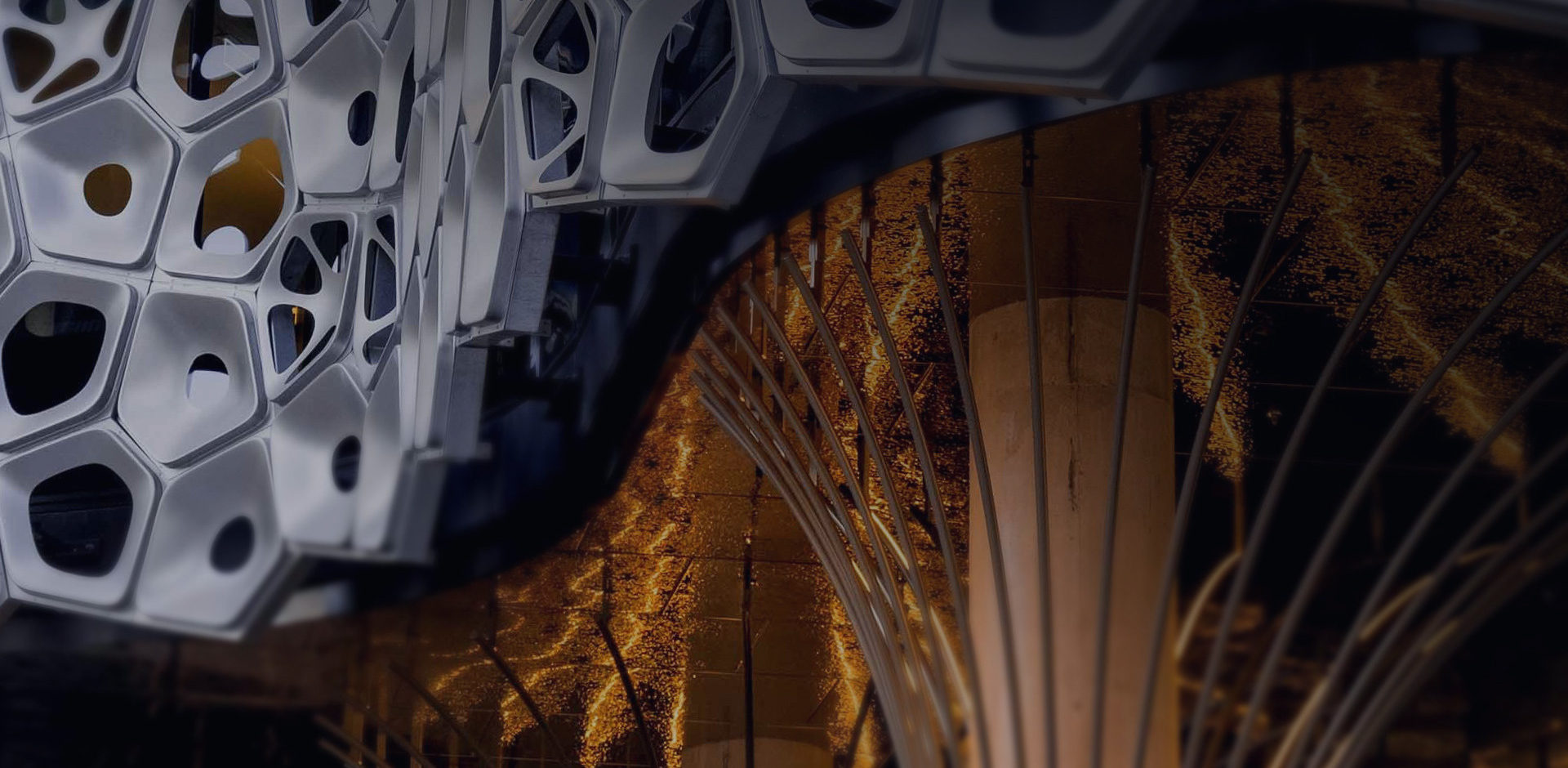
Advantages of PVDF fluorocarbon aluminum panels
PVDF fluorocarbon aluminum panels have unique textures, rich and durable colors and diverse shapes, and can be perfectly combined with curtain wall materials such as glass and stone. With perfect appearance, excellent quality and light self-weight - one-fifth of marble and one-third of glass curtain walls - they greatly reduce the burden on building structures and foundations, with low maintenance costs and high performance-price ratio.
In the localization of PVDF fluorocarbon aluminum panel curtain walls, composite aluminum panels and aluminum alloy single panels are mainly used. The composite aluminum panel consists of inner and outer layers of 0.5mm pure aluminum sheets (0.2-0.25mm for interior use) with a 3-4mm polyethylene (PE or PVC) core bonded by roll pressing and heat lamination, in specifications such as 1220mm x 2440mm. The fluorocarbon paint on the surface of the composite aluminum panel is also applied by roll coating and completed simultaneously with the roll pressing and heat lamination, with a coating thickness of about 20 microns. The composite aluminum panel has the advantages of light weight, cleanliness, good flatness and no color difference in the same direction, as well as good on-site processing performance - handling exterior wall dimensional changes caused by construction errors, shortening workshop processing time and installation periods.
When installing, PVDF fluorocarbon aluminum panels must be sheared to make wall panels. First, the panels are sheared according to the secondary design dimensions, taking into account the folding allowance - generally adding about 30mm to each side. According to curtain wall installation companies, the shearing yield rate is generally 60%-70%.
When shearing composite panels, the four edges need to be grooved, i.e. cutting off a certain width of the inner aluminum layer and plastic layer, leaving only the 0.5mm thick outer aluminum layer. Then the edges are folded into 90-degree external corners, and aluminum profiles are made into a sub-frame of the same size, placed in the groove of the bent aluminum-plastic panel. The bottom of the sub-frame is bonded to the back of the aluminum-plastic panel with structural adhesive, and the four folded edges are fixed to the outside of the sub-frame with rivets. Reinforcing ribs are generally added to the sub-frame to ensure the mechanical strength of the wall panel. The reinforcing ribs are aluminum and bonded with structural adhesive. Some non-standard practices only add reinforcing ribs at the four corners of the composite panel and bond them with double-sided tape, which greatly reduces their firmness.
PVDF fluorocarbon aluminum panels are generally 2-4mm aluminum alloy sheets. After being made into wall panels, the panels are directly folded according to the secondary design requirements, and the four corners are welded at high pressure into a tight channel shape. Reinforcing rib fixing bolts are left on the back of the wall panel, fixed by electric welding studs. After processing, the panels are sprayed with fluorocarbon paint, generally two to three layers, with a film thickness of 30-40 microns. Aluminum panels are easy to process into curved, multi-folded or sharp-angle shapes, adapting to today's ever-changing exterior wall decoration needs. With rich colors that can be freely selected according to design and owner requirements, they truly broaden the architect's design space.