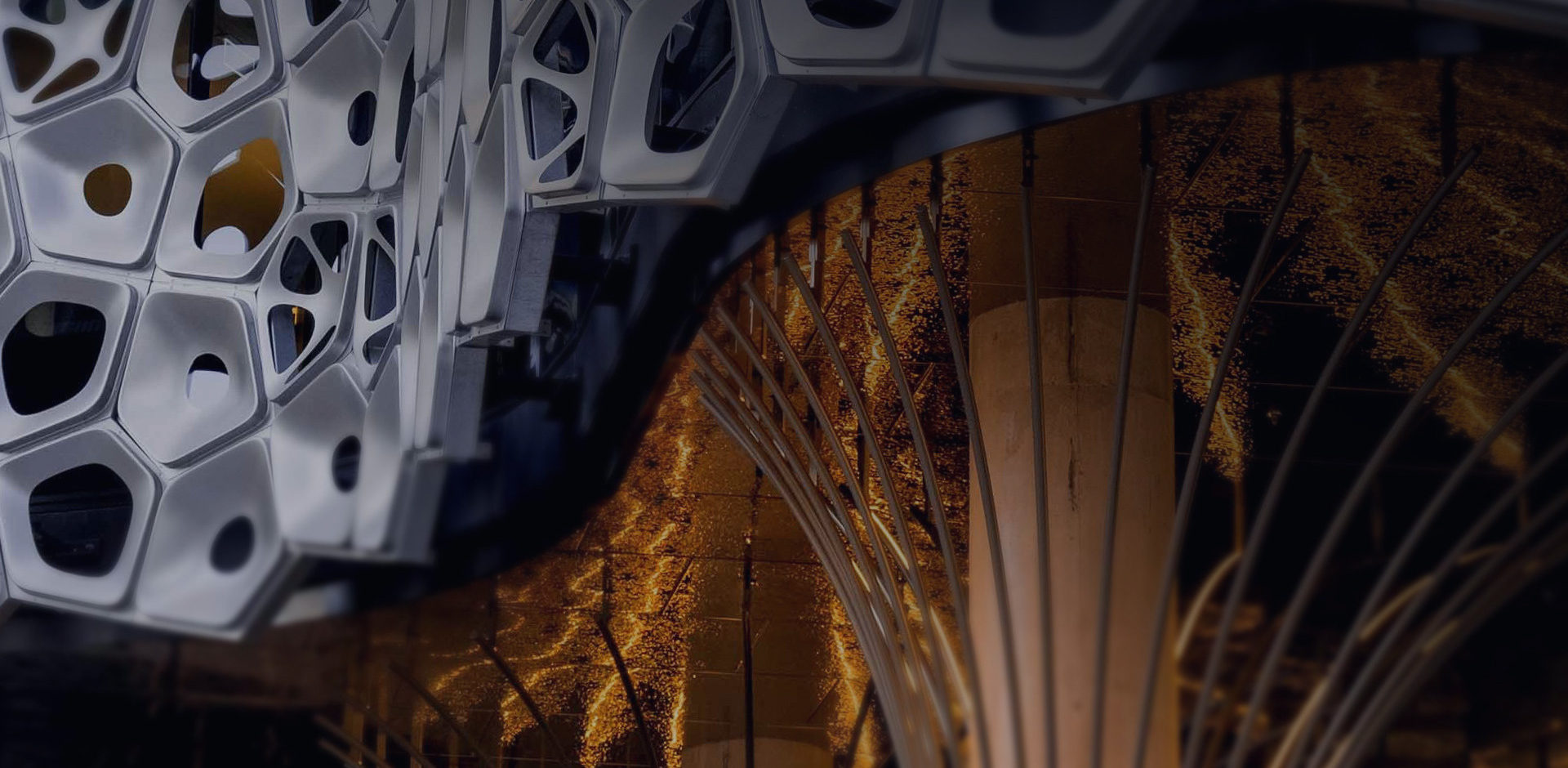
According to incomplete statistics, more than 40 million square meters of curtain wall projects have been built in China. From Beijing to the special economic zones, from large eastern coastal cities such as Shanghai to emerging western cities, beautiful new building curtain wall decorations can be seen everywhere on city streets. With the rapid development of the industry, the third-generation curtain wall material - porcelain-coated aluminum panels - has entered the construction market for its environmental characteristics, superior performance and more attractive price, covering the whole process from raw materials to production technology and maintenance and recycling.
Raw material selection for porcelain-coated aluminum panels:
The coating is a green, non-toxic and healthy coating - porcelain
The main components of the porcelain coating are silicon and oxygen, and no PFOA additives are required in its manufacturing and production - a completely green, non-toxic and healthy coating.
The ceramic coating uses the world's most advanced material research technology - the sol-gel method - which not only achieves low-temperature enameling of ceramic aluminum panels (about 180°C x 20 min), but also realizes the compounding of inorganic materials in the nanoscale field through sol-gel technology, overcoming the brittleness and toughness deficiency of traditional ceramic materials.
The main components of the porcelain coating are a three-dimensional network inorganic resin formed by the condensation of nanoscale alumina sol and silanol, and inorganic high-temperature-resistant pigments. It can change the appearance and structure of the substrate's outer surface, endowing the substrate with new properties.
Unlike organic coatings, the porcelain coating does not age from UV rays, acid rain, automobile exhaust and air pollution, providing better corrosion protection and being a semi-permanent material. The low surface energy of the porcelain coating and the ability of inorganic materials to eliminate static electricity prevent pollutants in the atmosphere from adhering, maintaining a magnificent appearance and self-cleaning performance. Combining the characteristics of the porcelain coating - special colors, excellent durability, semi-permanence, pollution resistance, non-combustibility and low-carbon environmental friendliness - porcelain-coated aluminum panels offer a brand-new building decoration material concept for the new century.
The base material is a renewable material - aluminum
Aluminum is chosen because it can be recycled repeatedly.
Currently, the world's annual production of primary aluminum is about 25 million tons, and the annual consumption of bauxite exceeds 100 million tons. Moreover, compared with the primary aluminum ingot produced from one ton of bauxite, the alloy aluminum ingot produced from one ton of scrap can save more than 95% of energy consumption.
According to relevant statistics, producing 1 ton of primary aluminum ingot consumes 213.2 TJ of energy (electricity accounting for about 82%), while producing 1 ton of recycled aluminum alloy ingot consumes 5.5 TJ (fuel accounting for about 80%), only 2.6% of the energy required for primary aluminum - a clear comparative advantage. Since aluminum can be recycled repeatedly, the energy-saving effect is even more significant when recycled aluminum scrap is used to regenerate aluminum.
In addition, compared with primary aluminum production, the amount of carbon dioxide generated and emitted during porcelain-coated aluminum panel production is greatly reduced. According to statistics, producing recycled aluminum reduces CO2 emissions by 91% compared with primary aluminum produced by hydroelectric power, by more than 97% compared with oil-fired power, and even more compared with coal-fired power.